
The Short Answer
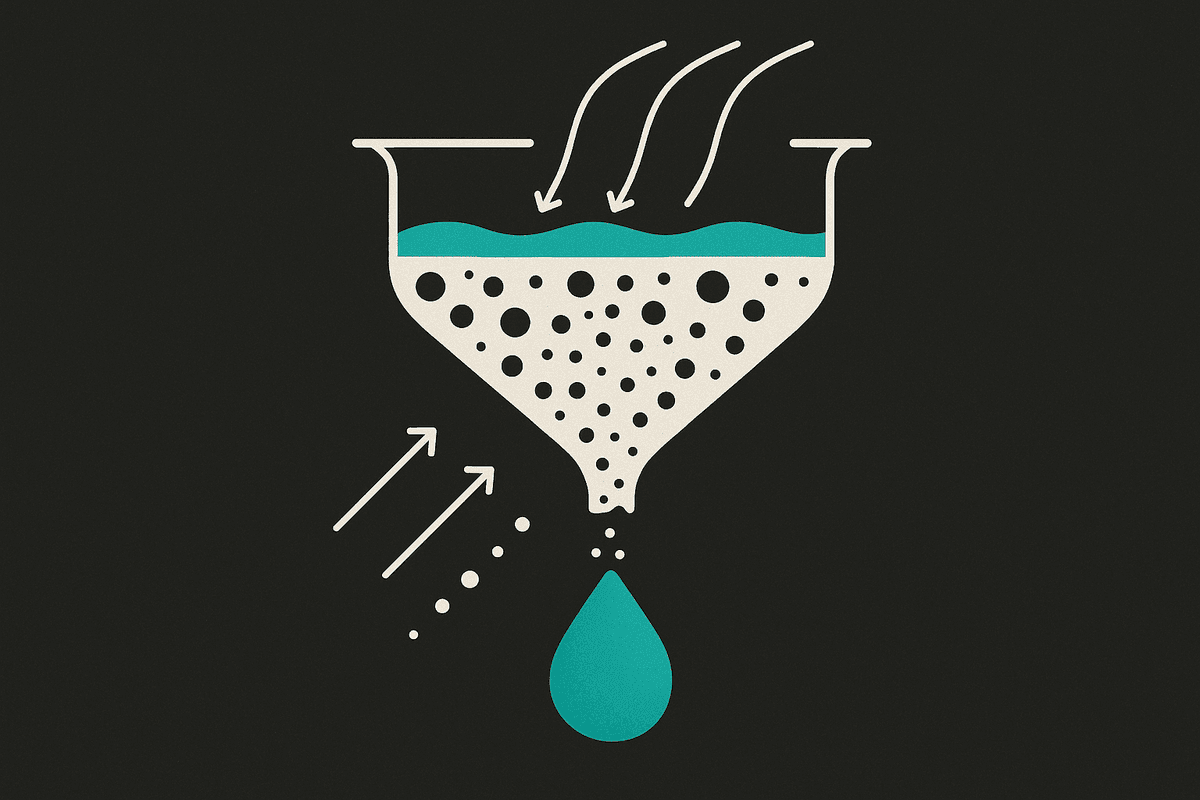
Your coffee is bitter for one of four reasons. The cup is too strong. The brew ran too long, too fine or too hot. The beans are dark-roasted or past their best. Or the brewer is coated in old coffee. The first two cover most bitter cups, and both are fixable by tomorrow morning.
TL;DR
- Too strong. Too much coffee for the water. In one big tasting study, bitterness tracked strength, not extraction [1].
- Over-extracted. Grind too fine, brew too long or water too hot. The brew kept going into the harsh, roasty end of what the grounds hold.
- Dark roast or stale beans. Roasting builds bitter compounds into the bean before you ever touch it [2], and old beans lose the aromatics that balance them.
- Dirty brewer. Old coffee oil doesn't rinse off with water, and it tastes like it.
Cause 1: The cup is simply too strong
How to tell: it's heavy, bitter and a bit rubbery, and a splash of hot water makes it noticeably nicer.
The fix: use more water for the same coffee. The Hoffmann V60 uses 15 g of coffee to 250 g of water, about 60 g per liter. Set your ratio in the brew calculator and move in small steps.
Why: UC Davis researchers brewed one coffee across a grid of strengths and extraction yields for a trained tasting panel. Bitterness rose with strength (dissolved solids), and across the extraction range they tested (16–24%) it showed no significant link to extraction at all [1]. And in immersion brewing, the ratio sets strength while barely moving how much you pull out of each gram [3].
Cause 2: The brew ran too far
How to tell: bitter and dry, ashy or hollow, with a finish that hangs around. A pour over that drains slowly or stalls is the usual suspect.
The fix: grind coarser first; it's the biggest lever. If your grinder is already dialed in, shorten the brew or drop the water a few degrees.
Why: coffee dissolves in a rough order, acids first and the heavy, roasty compounds last, which we walk through in the extraction queue. In the UC Davis panel, brown-roast and ashy notes climbed as extraction went up [1]. Fine grinding also makes dust, and fines slow the drain and over-extract fast. Water temperature matters mostly because it speeds all this up: at a fixed strength and extraction, brewing at 87, 90 or 93 °C tasted about the same [1]. More on that in why water temperature changes everything.
Cause 3: The beans
How to tell: it's bitter however you brew it, or burnt and smoky with a coating finish. Shiny, very dark beans or a bag opened two months ago point here.
The fix: try a lighter roast, and buy amounts you'll finish within a few weeks of roasting. A slightly coarser grind takes the edge off a dark roast in the meantime.
Why: most of coffee's bitterness isn't caffeine. Chemists at TU Munich found caffeine accounts for only about 15% of it; the rest comes from compounds made as chlorogenic acids break down in the roaster, and the harsher ones pile up in dark roasts [2]. More in the bitterness cascade. Stale beans lose their bright, sweet aromatics first, leaving a flat, woody cup. See why coffee goes stale.
Cause 4: The brewer, or the hot plate
How to tell: a stale, rancid edge that no recipe change fixes, or brown film in the carafe and basket.
The fix: wash everything that touches coffee with detergent or a proper coffee cleaner, not just a rinse, and descale the machine. Move finished coffee to an insulated flask instead of a hot plate.
Why: coffee oils repel water, so rinsing leaves them behind to oxidize. The hot plate is more of a slow leak than the villain it's made out to be. In a UC Davis holding study, drip coffee kept for up to three hours mostly lost aroma, and perhaps gained a little acidity, rather than turning bitter, and the authors concluded coffee can likely be held for 90 minutes or more without notable loss in quality. Unheated, insulated carafes did best [4].
Bitter, Sour, or Both?
Sour is sharp and quick, at the front of the mouth, like underripe fruit. Bitter is heavy and lingers at the back. Sour means the brew stopped too early, so you move the other way: finer, longer, hotter.
A cup that's sour and bitter usually isn't one setting that's off. Water found a fast lane through the bed, under-extracting most of the coffee while over-extracting the path it took. That's channeling, and the fix is an even bed: a good swirl, gentle pours, no craters.
Note
A tiny pinch of salt does take the edge off: sodium suppresses bitterness more than sweetness [5]. It hides the problem rather than fixing it.
Try this
- Taste for strength first. Add hot water to a little of your cup, a spoonful at a time. If it improves, fix your ratio and stop there.
- Then one variable at a time. Grind a notch or two coarser and brew again, with everything else the same. Note the grind setting and total time.
- Only then touch time or temperature. Shorten the brew or drop the water a few degrees, again on its own.
- Swap the beans last. Still bitter? Brew a lighter roast with the same recipe. Now you know whether it's you or the coffee.