

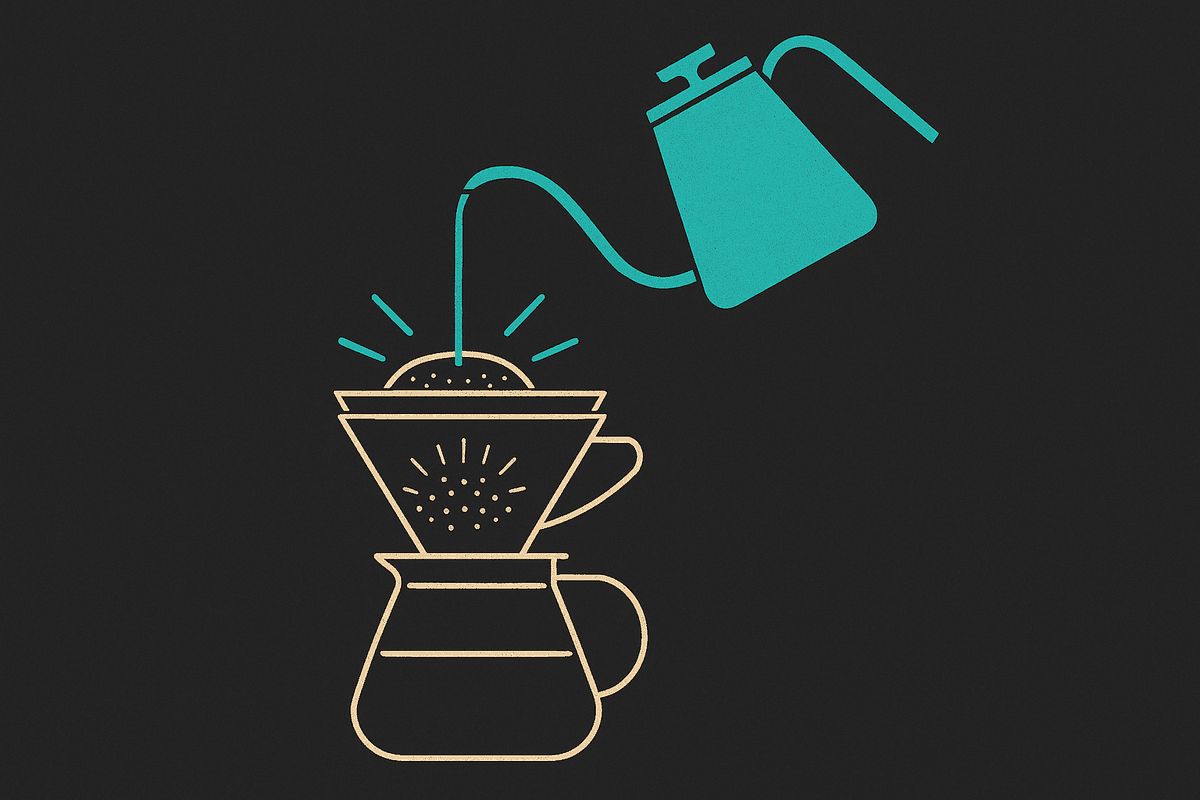
TL;DR: Channeling happens when water carves paths of least resistance through the coffee bed. Grounds along the channel over-extract (bitter), while the rest under-extract (sour). You taste both at once.
What’s Happening
Imagine a riverbed. Water finds low spots and cuts deeper channels, ignoring higher ground. Your coffee bed works the same way. Any inconsistency creates a path where water flows faster.
Along that channel, grounds give up everything — including harsh bitter compounds. Grounds millimeters away barely dissolve. Jonathan Gagné’s research shows even small disruptions create 5–8% extraction differences.
The Usual Suspects
Uneven grind: Fines migrate to the bottom and create dense patches. Blade grinders are the worst. Use a WDT tool to break up clumps.
Bad pouring: Hitting one spot digs a hole. Gentle concentric circles from center outward.
Uneven bed: If the bed is thicker on one side, water takes the shorter path. Swirl after bloom.
Too fine: Very fine particles compact under water weight, building pressure until water forces through a weak spot.
How to Spot It
Look at your spent bed. Flat and even = good. Crater or asymmetric pile = channeling happened.
Try This
Brew two V60s identically. First: dump grounds in, pour normally. Second: WDT the dry grounds, tap to settle, swirl after bloom. The second cup should taste cleaner and sweeter.