
TL;DR: Hotter water extracts more compounds, faster. The SCA recommends 200°F (93°C) as the sweet spot, but lighter roasts want it hotter and darker roasts cooler.
Water Is a Solvent (And Temperature Is the Dial)
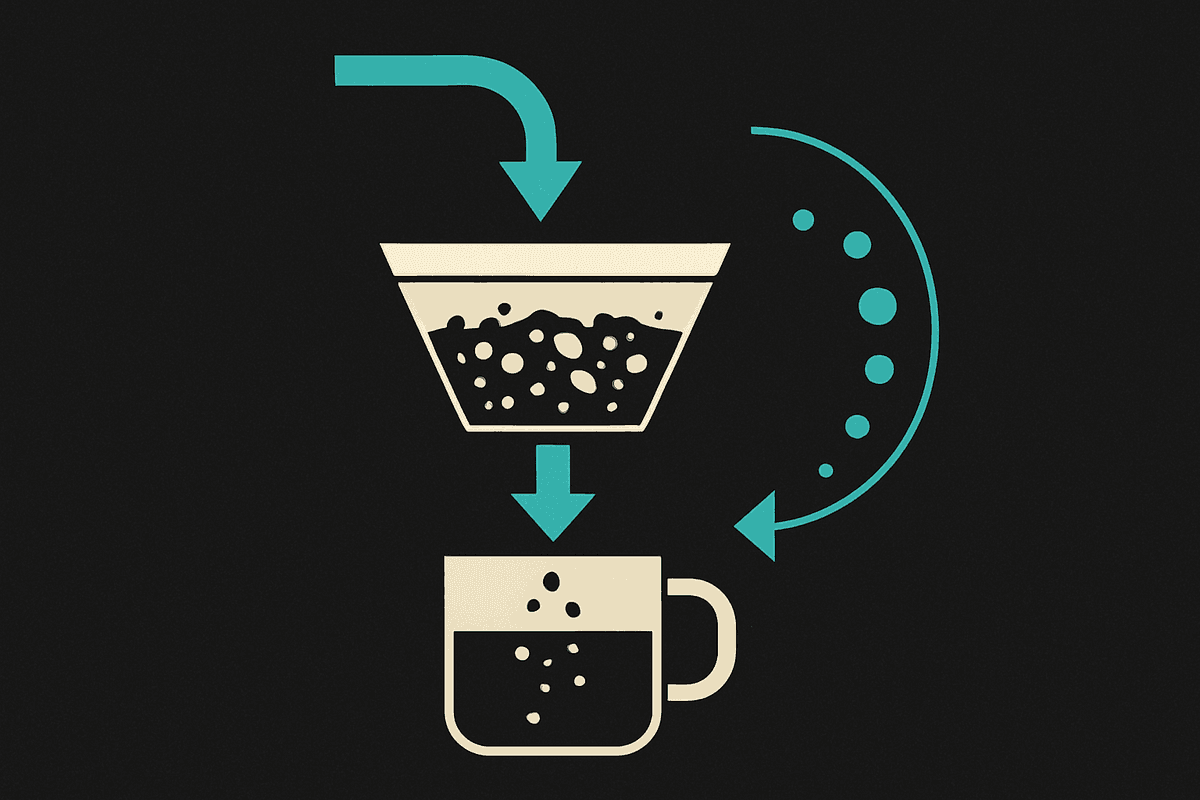
Brewing coffee is an extraction problem. You’re dissolving soluble compounds — acids, sugars, oils, bitter alkaloids — out of ground coffee and into water. Temperature controls the speed and selectivity of that process.
At higher temperatures, water molecules move faster and have more kinetic energy. Think of it like washing a greasy pan: cold water barely touches the grime, hot water cuts right through it.
What Extracts First (And Last)
Extraction follows a predictable sequence. Acids and fruity compounds dissolve first. Sugars and caramel-like compounds come next. Bitter compounds extract last.
Water that’s too cool under-extracts: you get sour, thin coffee. Water that’s too hot over-extracts: the cup tastes harsh and astringent.
The SCA Standard
The SCA recommends 195–205°F (90–96°C). Light roasts benefit from the higher end. Dark roasts do better with lower temps.
Try This
Brew the same coffee at 185°F, 200°F, and 210°F. Same dose, grind, and time. Taste them side by side.