
The Water That Hits Last Is Not the Same Water
The first water through your grounds and the last water out are having completely different conversations with the coffee.
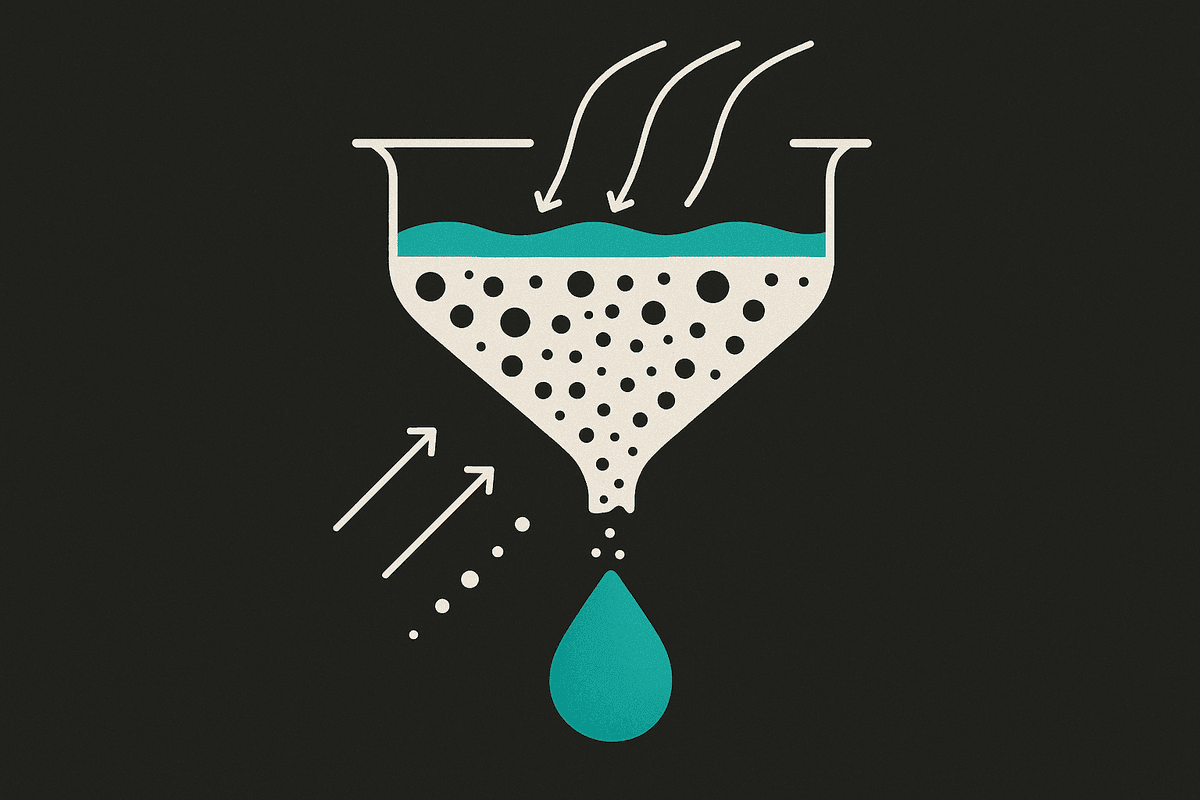
This isn't metaphor. Coffee's soluble compounds don't dissolve at the same rate — they queue up, broadly ordered from most soluble to least. Acids go first. Sugars and sweet Maillard products come next. Bitter phenolics and dry compounds bring up the rear. Every brew is a race to stop at the right place in that sequence.
TL;DR
- Coffee compounds extract in a predictable sequence: acids first, sweetness and body in the middle, bitter phenolics last.
- Under-extraction stops the queue too early — you pulled the acids without the sweetness that would balance them.
- Over-extraction runs the queue too long — you kept going into the bitter compounds that should have stayed in the grounds.
- The SCA's 18–22% extraction yield target is a way of marking where in that sequence you should stop.
The Queue
Early phase: acids. The small organic acids — citric, malic, lactic, chlorogenic — are highly soluble and dissolve fast. Within the first part of any brew, the water is already carrying a significant acid load. That's not inherently bad; these acids give coffee brightness and clarity. It becomes a problem only if you stop here [1].
Middle phase: sweetness and body. Soluble carbohydrates and Maillard-reaction products dissolve over the middle phase. They contribute sweetness, texture, and the rounded quality that prevents an acidic cup from reading as sharp [2]. This is what the SCA's extraction research was designed to capture.
Late phase: bitter compounds. Phenolics, certain alkaloids, and the compounds that contribute dryness and astringency dissolve last. Prolonged or high-temperature extraction drives a secondary mechanism on top of this: chlorogenic acids — already partially degraded during roasting — continue to break down in hot water, generating quinic acid, which tastes distinctly bitter and medicinal [3].
[!DATA value="18–22%" label="SCA target extraction yield — the window where acids, sweetness, and body arrive in balance"]
What "Sour" Actually Means
Under-extracted coffee doesn't taste sour because you used bad beans or the wrong ratio. It tastes sour because the queue stopped before the balancing act completed. You got the acids. You didn't wait for the sweetness [2].
The fix is giving the queue more time to run: finer grind (more surface area, faster extraction), hotter water (higher solubility and diffusion rate), longer brew time, or some combination. Any variable that pushes extraction yield up will shift the cup away from sour and toward balanced.
Note
Acidity and sourness are not the same sensation. A well-extracted light roast can taste intensely bright and citrusy — that's acidity, a quality. Sourness is the signal that the queue stopped too soon and there's nothing to balance the acids. You can have high acidity without sourness; they live in different parts of the extraction window.
What "Bitter" Actually Means
Over-extracted coffee isn't just stronger. The queue ran into the late phase — the dry phenolics and degraded chlorogenic acids — and those compounds are genuinely unpleasant, not just intense [3].
This distinction matters when you're troubleshooting. The fix for over-extraction is not less coffee. It's a coarser grind, cooler water, shorter brew time, or reduced agitation — anything that slows or shortens the queue before the bitter compounds dominate.
Caution
A common mistake: responding to bitterness by reducing the dose. This usually produces a cup that's both weak and bitter, because you've still run the queue to the same end point — you just started with fewer solids. Adjust the extraction variables, not the dose.
The Kinetics Behind It
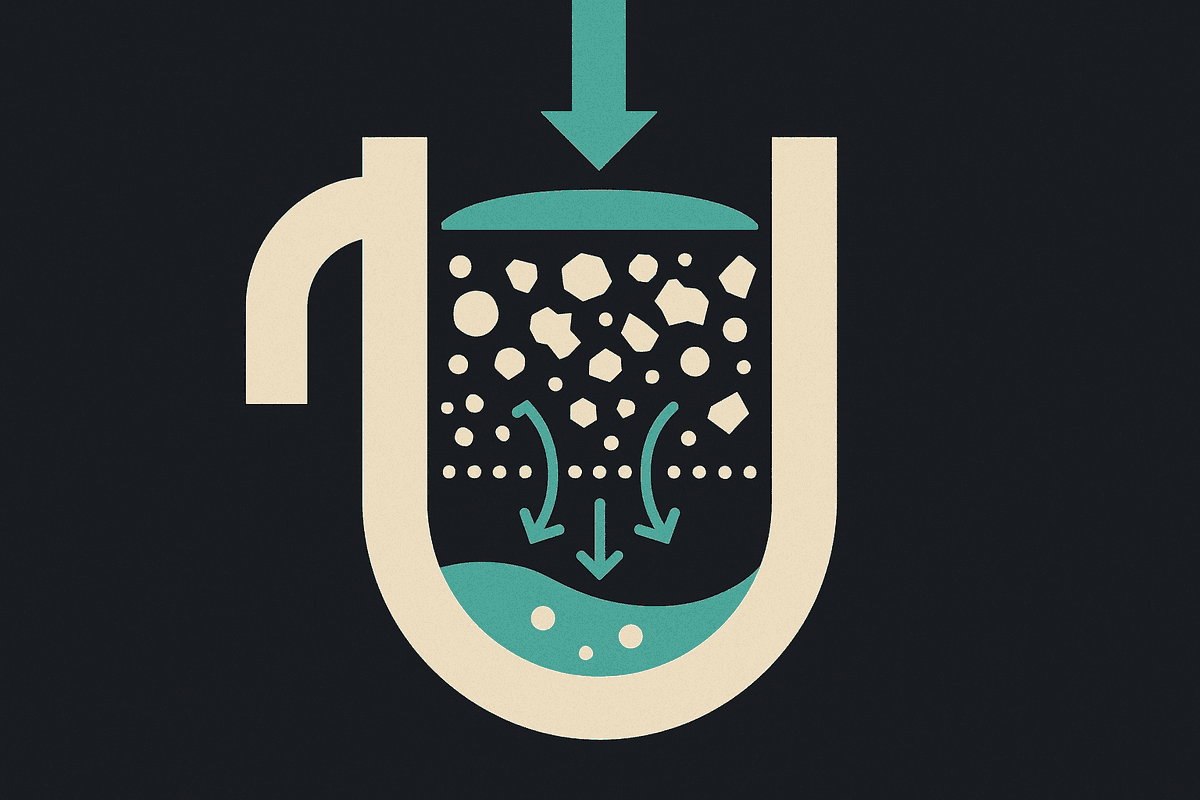
In 2016, researchers at the University of Limerick published the first full mathematical model of coffee extraction, using what they called a "double porosity" framework. They separated two distinct phases: a fast initial extraction from the outermost surface of each grind particle, and a slower, diffusion-limited extraction from inside the particle's pore structure [4].
The rate-limiting step is that internal diffusion. Water reaches the surface of a grind particle almost immediately — what actually determines extraction rate is how quickly compounds can migrate from deep inside the particle to where the water can carry them away. Finer grinding shrinks the distance compounds have to travel. Higher temperature speeds up molecular movement. Both levers accelerate the same underlying process.
This model explains something useful: in a well-designed brew, extraction from the outside of each particle happens in seconds. What determines whether you end up in the acid phase, the sweet phase, or the bitter phase is almost entirely how long you let diffusion from the interior run.
The 18–22% window isn't an arbitrary specification. It's a description of where in the extraction sequence you should stop — before the bitter compounds dominate.
What to Do With This
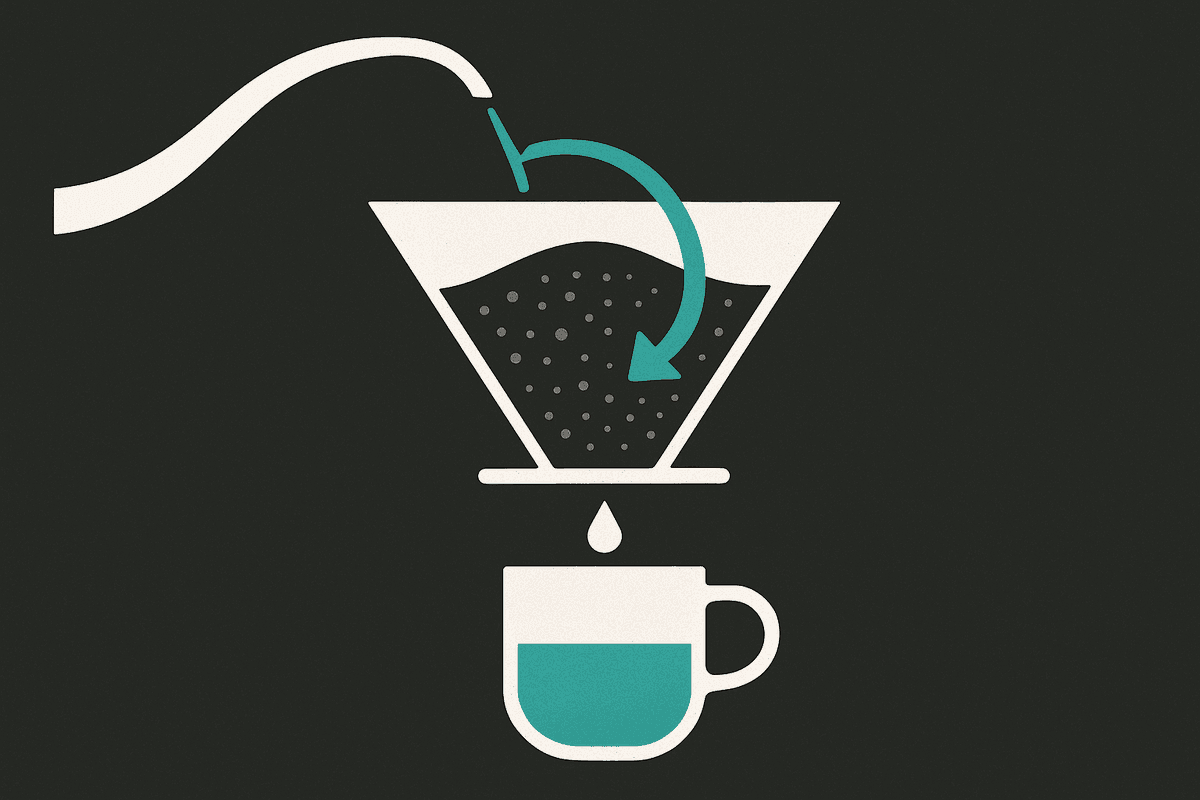
Most troubleshooting adjustments are adjustments to where you stop the queue. A shot that pulls too fast stops in the acid phase. A brew that grinds too fine and runs too long stops in the bitter phase. The sequence itself doesn't change — you're moving the exit point.
The practical move is to taste with this map in mind. Sour signals early queue. Bitter signals late queue. Thin and flat with adequate time suggests you're getting diffusion from the surface but not from inside the particle — worth trying a finer grind to open more interior surface area and pull more of the sweet middle phase [5].
Try this
- Brew two cups with the same dose and ratio, different steep times. Make a French press at 3 minutes and another at 6 minutes, everything else identical. Taste side by side. The shorter steep is brighter and thinner; the longer one is heavier and more bitter. You're watching the queue run longer on the second cup.
- Taste your espresso mid-shot. If you have a bottomless portafilter, collect the shot in stages — the first third, the middle third, the last third. The first third is intensely acidic and aromatic. The last third is bitter and dry. The full shot blends all three queue phases into one cup.