
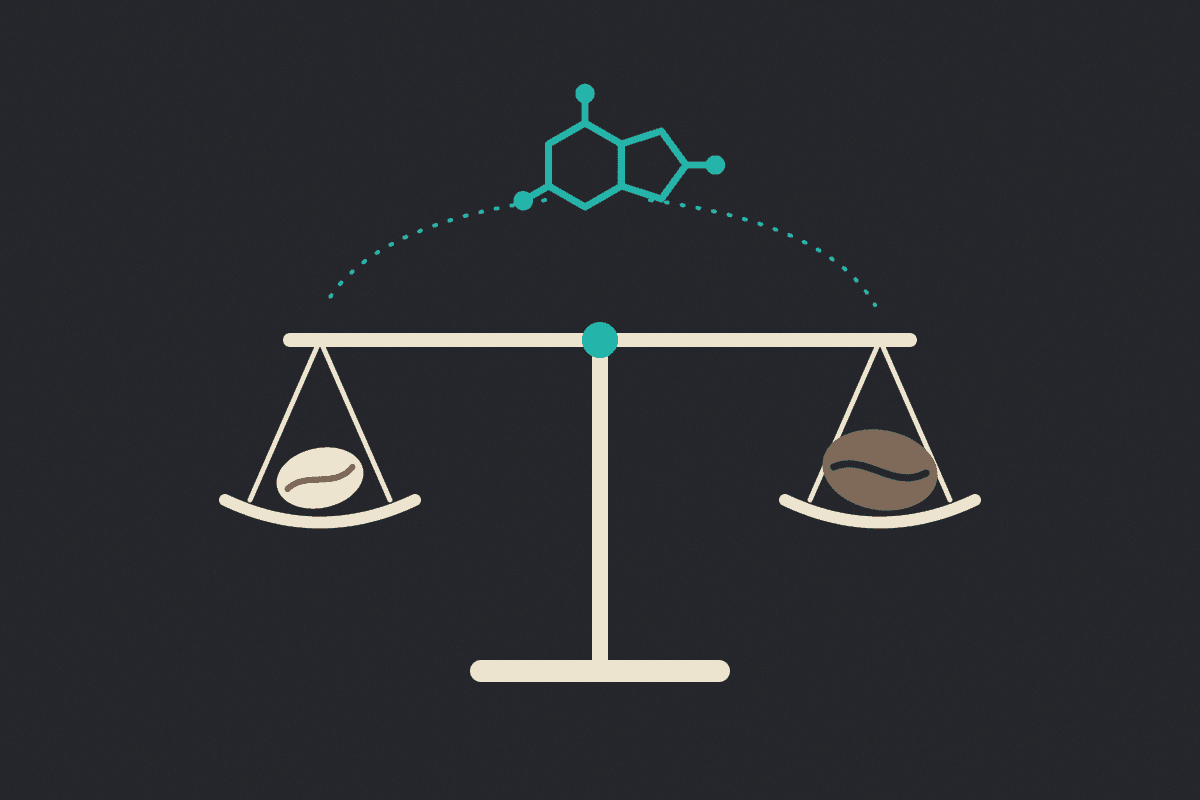
Short answer: no. Dark roast doesn't have more caffeine than light roast. Per bean, the two are close to identical. Scoop for scoop, light roast usually comes out slightly ahead. Weigh your coffee and the gap shrinks to almost nothing.
Dark roast tastes "stronger," and strong gets read as "more caffeine." Flavor and caffeine are separate things. Here's what happens to caffeine in the roaster, and what roast level changes instead.
TL;DR
- Caffeine barely changes during roasting. Light and dark beans carry nearly the same amount per bean, with a small loss only at the darkest roasts [1][2].
- Dark beans lose more weight and puff up more, so they're lighter and less dense [3][4]. A scoop of dark roast holds less coffee, and so a little less caffeine.
- By weight it's close to a wash. In a 2024 brewing study, medium roasts delivered the most caffeine to the cup and dark roasts the least [1].
Caffeine is the survivor in the drum
Roasting rearranges coffee chemistry from top to bottom: sugars and amino acids recombine into hundreds of new compounds via the Maillard reaction. Caffeine mostly sits it out. It's a sturdy molecule, and the beans hold onto it well past first crack.
It isn't untouchable. A 2024 study from Berry College and Drexel University roasted two coffees to five levels and found caffeine in the brewed cup started to drop only once beans finished hotter than about 400–420 °F (205–215 °C), deep into dark territory [1]. An earlier study of four coffees also saw caffeine dip at darker roasts [2]. The losses are small. Nobody is roasting the caffeine out.
Weight vs. scoop: where the myth comes from
The roaster removes little caffeine but plenty of everything else. Water steams off; sugars and acids turn into gases and smoke. The longer the roast, the more weight the beans lose.
11–19%
Weight Arabica beans lost from light to dark roast in one study
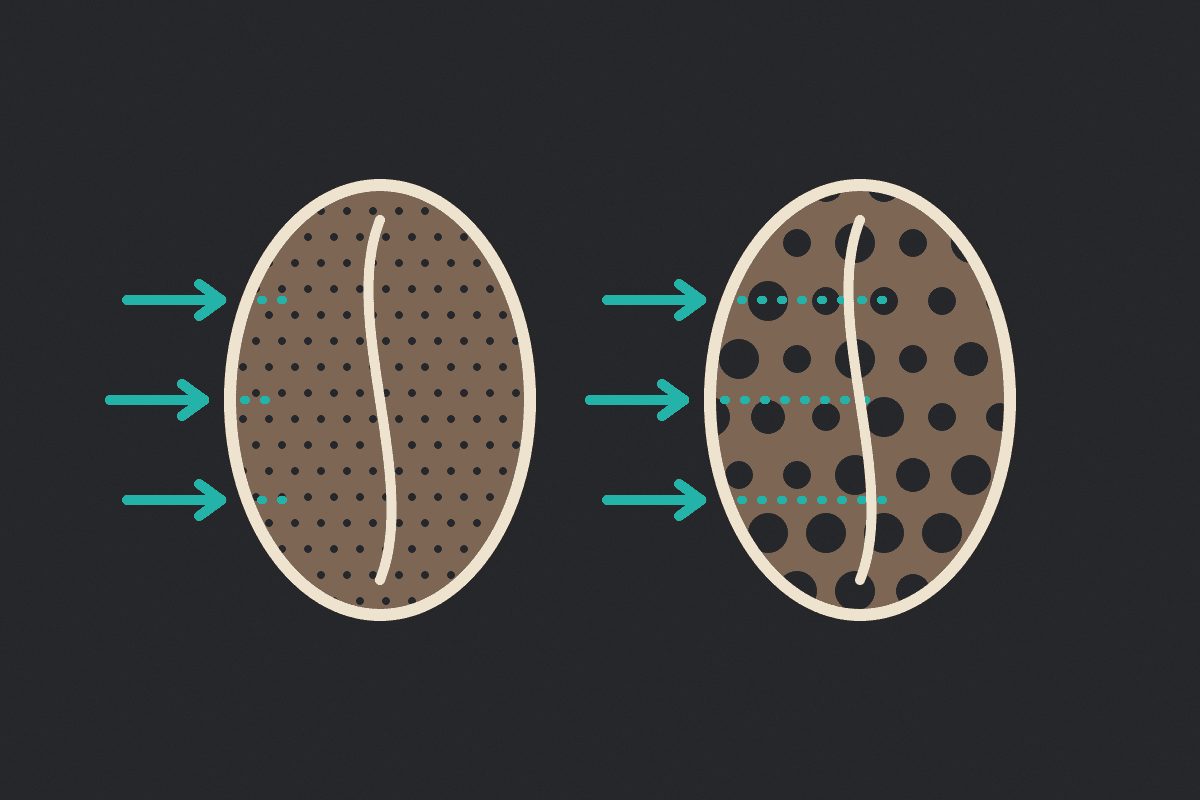
Meanwhile the beans swell and turn porous, so a dark bean ends up bigger and lighter than a light one [3][4]. That gives two ways to compare:
By the scoop (volume): dark beans are less dense, so the same scoop holds fewer grams of coffee. Fewer grams means less caffeine. Light roast wins, slightly.
By weight: the dark roast lost more non-caffeine mass, so its caffeine is slightly more concentrated per gram. That's where the "dark roast has more caffeine" claim comes from, and on paper it can hold up.
The cup is where it falls apart, because dark roasts extract differently. In the 2024 study, brewed with an identical recipe, dark roasts generally ended up with less caffeine than light and medium ones. Cup caffeine peaked in medium roasts that had lost about 14–16% of their mass [1]. Across every roast and brew time, the range was 134–165 mg per 8 oz cup: real, but modest. (What that caffeine does once you drink it is another story: caffeine doesn't give you energy.)
What roast level actually changes
Caffeine stays put. Nearly everything else moves.
Acidity. A light roast's bright, fruity snap comes mostly from citric and malic acids, and both fade as the roast goes darker (more on acidity). Chlorogenic acids break down too. Light and medium roasts keep the most of them [2], and what they break into leans bitter and astringent rather than bright. Together that's a big part of why light roasts taste lively and dark ones taste mellow.
Bitterness. As those acids degrade, some breakdown products turn into harsher, lingering bitter compounds. We traced that chemistry in the chlorogenic acid bitterness cascade.
Sweetness and roast flavor. Sugars feed caramelization and the Maillard reaction. Push further and the sweet, nutty middle gives way to smoke, char and cocoa. Past a point, the roast starts to drown out the origin.
Body and oil. Darker roasts build more melanoidins, which add weight to the cup (more on body). The more porous structure also lets oils reach the surface, which is why dark beans look glossy and light ones matte (more on oils).
Most of this is decided after first crack: how long development runs, and how hot the beans get before they drop.
Pick a roast for how it tastes. The caffeine comes along either way.
So which should you drink?
Choose by flavor. Bright, fruity, tea-like cups: go lighter. Chocolate, smoke and heavy body: go darker. If you want more caffeine, brew a little more coffee instead of switching roasts.
Try this
- Weigh, don't scoop. Put one level scoop of a light roast and one of a dark roast on a kitchen scale. The light roast usually weighs more. That difference is your entire "caffeine gap."
- Brew by weight for a fair fight. Use the same dose in grams and the same ratio for both (our brew tools will do the math). Now the difference you taste is the roast, not the scoop.
- Taste acidity, then bitterness. Sip each as it cools. Find the brightness in the light roast and the lingering bitterness in the dark. That's roast chemistry, not caffeine.
Curious how different roasts taste side by side? Browse what's on the shelf right now and taste your way through.