

The Layer Everyone Argues About
Crema is the most visible thing about an espresso. Brown, persistent, the first thing you photograph and the last thing you think about. It's also one of the most consistently misread signals in coffee.
The popular theory: thick crema = well-pulled shot = good beans. It sounds plausible. It's mostly wrong.
TL;DR
- Crema is a CO₂ foam stabilized by melanoidins, polysaccharides, and emulsified oils — not steam, not "espresso essence."
- Thickness alone doesn't indicate quality. Robusta and over-roasted beans often produce more crema than fine arabica.
- Ultra-fresh beans produce excessive crema that can impair extraction — resting time exists partly because of this.
- The liquid below the crema is typically sweeter and more balanced than the foam itself.
How It Forms
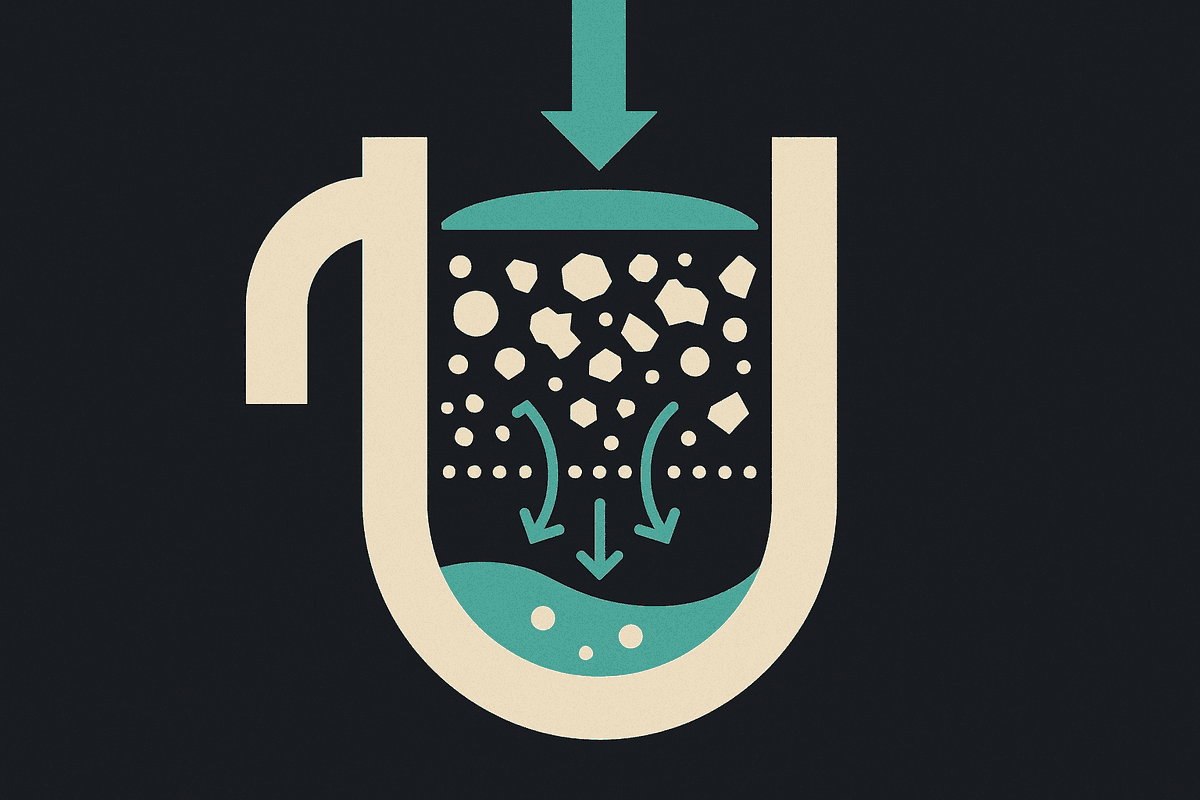
Espresso water passes through ground coffee at around 9 bar — roughly nine times atmospheric pressure. Under that pressure, the carbon dioxide trapped inside roasted coffee cells dissolves into the brewing water at concentrations that couldn't persist at normal atmospheric pressure [1].
When the espresso drops into the cup and pressure releases, the CO₂ can no longer stay in solution. It nucleates — comes out of the liquid as tiny bubbles — the same fundamental mechanism as cracking open a carbonated drink, just finer, slower, and triggered by a pressure drop rather than a seal breaking.
Those bubbles would collapse immediately if nothing held them together. What holds them is the chemistry of the brew: melanoidins (the large brown polymers from the Maillard reaction), polysaccharides, and emulsified coffee oils coat each bubble, forming thin lamella films that slow drainage and keep the foam stable for minutes rather than seconds [2].
[!DATA value="~2 min" label="How long before crema begins visibly separating and thinning on a well-pulled shot"]
The Robusta Problem
Here's the counter-intuitive part. Robusta beans are higher in chlorogenic acids than arabica. During roasting, those chlorogenic acids form 4-vinyl catechol-based surfactants — surface-active molecules that are particularly effective at stabilizing foam [3].
The result: a blend heavy with robusta will often produce a thicker, more persistent crema than a single-origin arabica shot pulled to the same parameters. A reason Italian espresso tradition leans on robusta in its blends is precisely this: crema holds longer, looks more dramatic, survives the walk from machine to table. None of that reflects the underlying cup quality.
Note
"Tigering" — the striped or mottled pattern that appears as crema ages — is drainage in progress, not a quality indicator. The pattern forms as heavier liquid drains through the foam, segregating the layers. It tells you how long since the shot was pulled, not how well it extracted.
Fresh Beans Make More Crema — To a Point
Freshly roasted beans hold the most CO₂ in their cell structure. Extraction releases it rapidly, generating abundant crema. This is why the cafe wisdom says "thick crema means fresh beans." That heuristic is roughly correct in the ballpark of 1–6 weeks post-roast.
The problem is that truly freshly roasted coffee — within the first few days off the roaster — carries so much dissolved CO₂ that it interferes with extraction. Bubbles forming inside the puck create channels and uneven flow. The crema looks spectacular; the shot often tastes gassy and hollow underneath [1].
This is what resting time addresses. A light roast typically benefits from 7–14 days off-roast before CO₂ drops into the range where extraction runs cleanly. The crema will be slightly less dramatic. The shot will taste better.
What You're Actually Tasting
Crema is not just aesthetically different from the liquid below — it's chemically different. The foam concentrates volatile aromatic compounds near the surface, which is why smelling a fresh shot is so vivid. It also carries a higher proportion of bitter and astringent compounds: concentrated melanoidins, caffeine, and degraded phenolics [4].
The liquid underneath is generally sweeter and more rounded. Drinking espresso normally blends both phases in each sip — the bitterness at the front is partly the foam, the sweetness that follows is partly the liquid below.
Caution
Judging a shot by crema thickness alone ignores most of what's in the cup. Some baristas remove the crema before serving a latte or cappuccino; it dissolves into milk anyway and its compounds either mellow or disappear. Others keep it for the aromatic hit and textural contrast in a straight shot. Neither is wrong. But "the crema looked good" is not a quality check.
What Crema Actually Tells You
It's not useless. A complete absence of crema can indicate stale beans or significant under-extraction. Coarse, large-bubbled crema often means the grind is too coarse or pressure too low. Dark or near-black crema suggests over-roast or over-extraction. A honey-colored layer with fine, uniform bubbles is a reasonable positive signal — it means the beans had CO₂ to release and the extraction ran to pressure.
But it's a rough signal, not a precise one. A thick crema does not promise a balanced cup.
Try this
- Taste the crema alone. Spoon it off a freshly pulled shot before it dissipates and taste it on its own. Note the bitterness and aroma intensity versus the liquid below. The two phases are noticeably different.
- Pull the same shot twice from beans at different rest ages — a few days off-roast and a few weeks off-roast. Compare crema volume and taste side by side. The fresher beans will likely produce more foam. Whether that translates to a better-tasting shot is for your palate to decide.
The crema is a byproduct of physics. It tells you CO₂ came out of solution and that your beans had volatiles to release. It is not a scorecard.