
Your Cup Is Part Dietary Fiber
The brown color in your mug is not a pigment. The heavier, rounder body in a dark roast is not just lower acidity. And somewhere in the chemistry of roasting, coffee quietly generates a compound class that escapes your digestion entirely — arrives in your colon, feeds your gut bacteria, and is technically classified as dietary fiber.
The compound is a melanoidin. You've been drinking it your whole coffee-drinking life.
TL;DR
- Melanoidins are large brown polymers that form at the final stage of the Maillard reaction during roasting. They're the primary reason coffee is brown.
- They're non-digestible — they pass through the stomach and small intestine intact and reach the colon, where gut bacteria partially ferment them. Technically dietary fiber.
- Dark roasts contain significantly more melanoidins than light or medium roasts, which is part of why they taste heavier, look darker, and have a more complicated antioxidant profile than simple "roasting destroys antioxidants" narratives allow.
How They Form
You're familiar with the Maillard reaction — the cascade of chemistry between amino acids and reducing sugars under heat that drives browning across cooking. Most of the early- and middle-stage products are relatively small, volatile molecules: the aromatics, the pyrazines, the aldehydes responsible for roasted smell.
Melanoidins are what happens when those reactions run to their endpoint and the intermediates polymerize. They're large, structurally complex compounds built around a polysaccharide backbone — arabinogalactans and glucomannans from the green bean's cell walls — with chlorogenic acid fragments, proteins, and other materials covalently and non-covalently incorporated throughout [1].
They're not one clean molecule. They're a population of related structures, all dark brown, all high molecular weight, all chemically resistant to the digestive enzymes your body uses to break down food.
Why Dark Roast Looks and Tastes Different
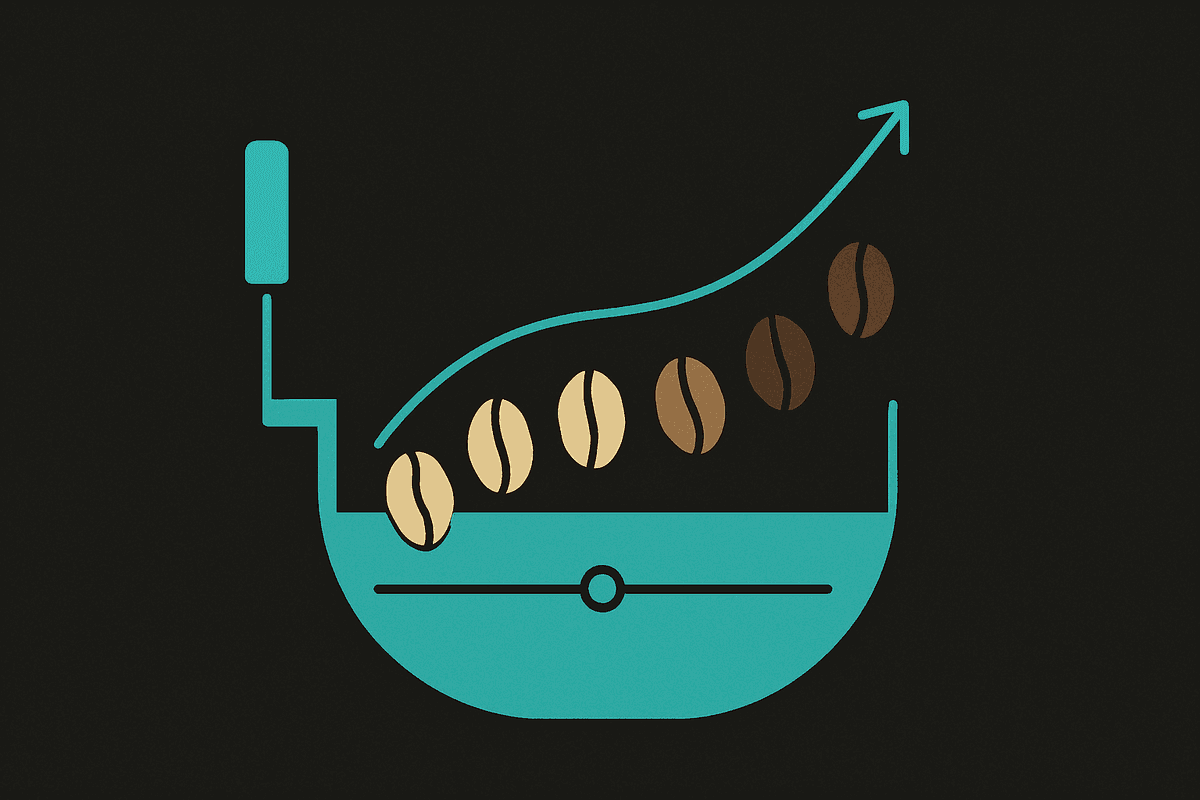
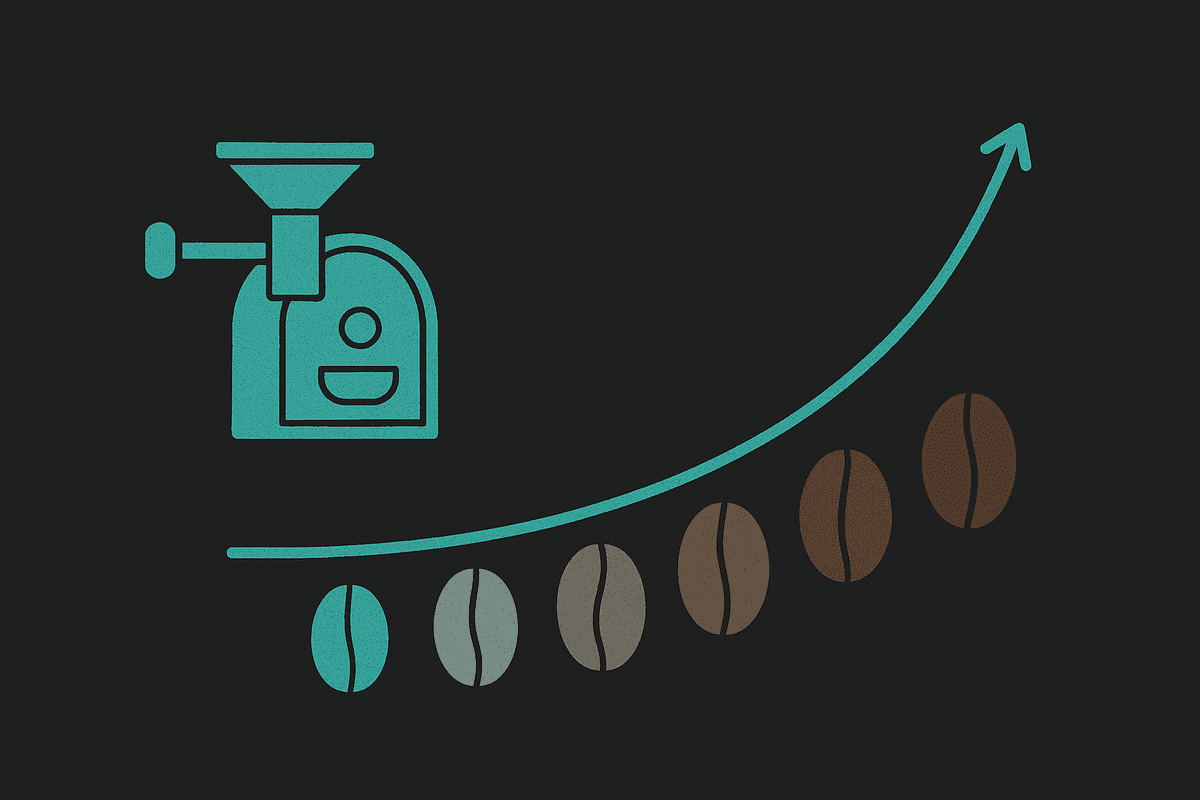
Melanoidin concentration increases substantially with roast level. Light roast generates relatively few; medium roast considerably more; dark roast is dominated by them. The color difference between a light brew and a dark one isn't mainly from dissolved organic acids or caffeine — it's from melanoidins in solution, which absorb blue-green wavelengths and transmit reddish-brown [1].
Body and mouthfeel shift with them. Dissolved melanoidins add viscosity in ways that smaller flavor compounds can't — they're large enough to interact with water structure and with each other in ways that register as weight, roundness, and the sensation that lingers after the sip [2]. This is part of what people mean when they say a dark roast "feels heavier." It does, measurably, compared to the same coffee roasted lighter. Lower acidity helps, but the physical presence of dissolved high-molecular-weight polymers is doing real work.
The Fiber Classification
Melanoidins reach the colon largely intact and are partially fermented by gut bacteria — specifically, they appear to favor bifidobacteria over less favorable species [3]. This prebiotic profile is why several research groups now classify them as "Maillardized antioxidant dietary fiber."
The intake numbers are not trivial. A moderate coffee drinker consumes roughly 0.5 g of melanoidins per day from coffee alone; a heavier drinker reaches closer to 2 g [4]. That's not a fiber supplement, but it's not nothing — especially given that the intake comes passively, with zero extra effort.
[!DATA value="0.5–2 g/day" label="Melanoidins consumed from coffee alone, for moderate to heavy drinkers"]
The Antioxidant Complication
Light-roast advocates have a point: roasting does degrade chlorogenic acids — the primary antioxidant class in green beans. A dark roast might retain only a fraction of what a light roast preserves.
What gets less attention is that melanoidins are themselves antioxidants, and they increase as roast level climbs. Research estimates they contribute roughly 25–47% of the antioxidant activity in darker roast brews [5], partially compensating for the lost chlorogenic acids. The total antioxidant capacity still falls with darker roasting — but the fall is shallower than the "roasting destroys antioxidants" framing implies.
Two processes run in opposite directions simultaneously: chlorogenic acid degradation reducing antioxidant capacity, melanoidin formation adding it back. The balance shifts with every degree on the roast profile.
Note
This is why neither "light roast has more antioxidants" nor "dark roast is antioxidant-poor" is quite right. Light roast has more chlorogenic acids. Dark roast has more melanoidins. The sources of antioxidant activity are different compounds, not simply more or fewer of the same ones.
What This Changes
Nothing dramatic. The cup in front of you is still mostly water, dissolved organic acids, and volatile aromatics. But some fraction of what makes it brown, what makes a dark roast feel heavy, and what makes its antioxidant profile more resilient than the simple degradation narrative allows — that's melanoidins. They form in the drum, dissolve in the brew, and bypass your digestion on the way to your microbiome.
Nutrition labels don't track them. That doesn't mean they're not there.
Try this
- Body check. Brew a medium and dark roast of the same origin at the same dose-to-water ratio and water temperature. Before evaluating flavor, evaluate body — hold the liquid gently between your tongue and the roof of your mouth and notice the thickness and how long the sensation lingers. The difference is partly melanoidins in solution.
- The invisible fiber. Most people consume melanoidins daily — from coffee and from bread crust — without knowing they exist. If you drink two or three coffees a day, you're getting a gram or more of prebiotic fiber from a source that never appears on a nutrition label.
The roasting process destroys antioxidants and creates them in the same move. Which chemistry wins depends on how dark you go.