

The Alkaloid Nobody Talks About
Caffeine gets all the credit. It's the most-cited compound in your cup, the thing people invoke when they justify a third brew. But coffee has another alkaloid — one that's present in the green bean at comparable concentrations, that almost entirely disappears by the time you grind it, and that in the process produces niacin, roasty aroma compounds, and a molecule that quietly tells your stomach to calm down.
That alkaloid is trigonelline.
TL;DR
- Trigonelline is the second most abundant alkaloid in green coffee, present at ~0.6–1.2% dry weight in Arabica beans.
- Roasting converts 50–90% of it into niacin (vitamin B3), volatile pyridines that define dark-roast aroma, and N-methylpyridinium — a compound that inhibits gastric acid production.
- Light roasts retain more intact trigonelline; dark roasts trade it for a chemically different set of compounds entirely.
Where It Starts
The plant makes trigonelline by adding a methyl group to nicotinic acid — the same molecule we call vitamin B3. Biochemically, it's niacin with a modification that makes it more stable in the seed. In green Arabica beans, it sits at roughly 0.6–1.2% of dry weight [1] — less than caffeine by mass, but not by much, and far more than most drinkers realize is there.
In the raw seed, trigonelline contributes mild bitterness. Same defensive chemistry as caffeine: discouraging things from eating the seed before it can germinate.
[!DATA value="0.6–1.2%" label="Trigonelline as share of dry weight in green Arabica beans"]
What the Roaster Does to It
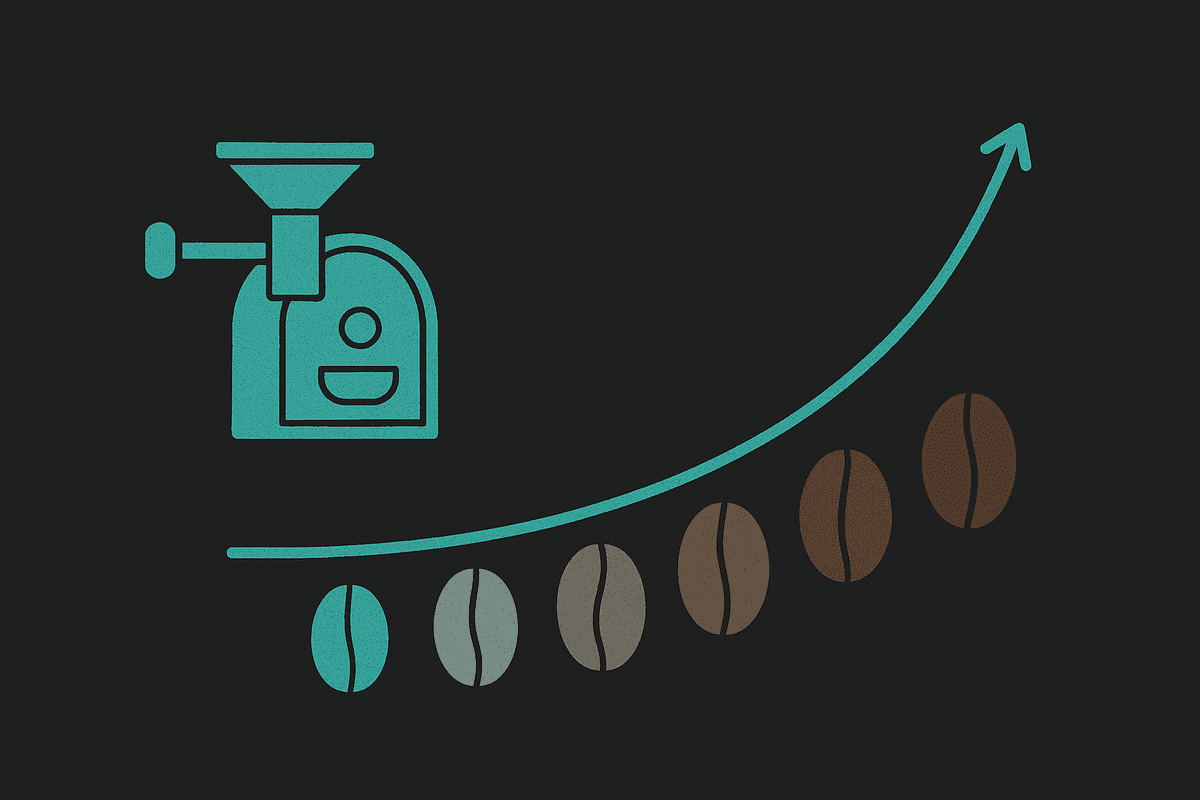
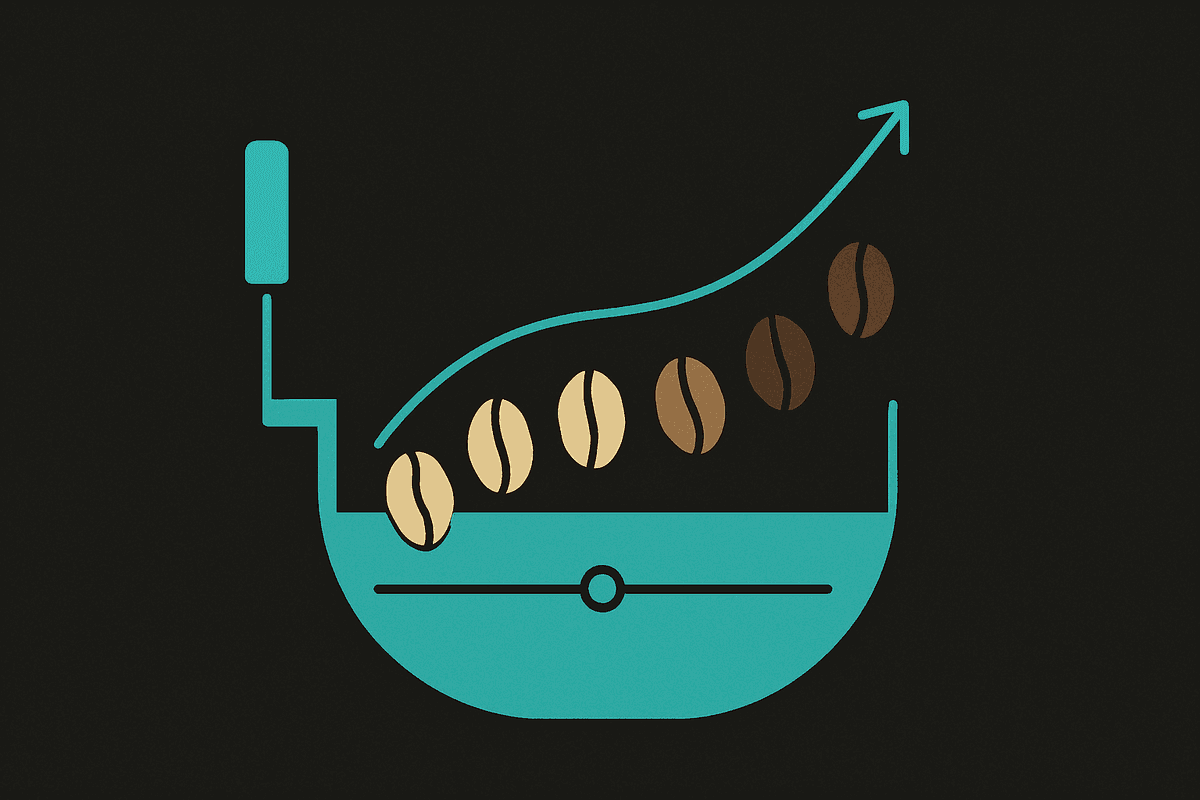
From around 160°C onward, trigonelline begins decomposing. The darker the roast, the more is lost: a light roast might degrade 50% of the starting amount; a dark roast can strip away close to 90% [2]. It doesn't vanish — it transforms.
The decomposition runs in two main directions:
Demethylation → nicotinic acid. The methyl group peels off and you get niacin back. A single espresso shot can deliver 5–10 mg of it depending on roast level and extraction — approaching half the recommended daily intake [3]. Your morning coffee is a legitimate niacin source. That isn't marketing; it's just chemistry.
Decarboxylation → volatile pyridines. A different reaction pathway expels CO₂ with the methyl group, producing pyridine compounds with earthy, musty, roasted character. These are part of what makes a dark roast smell the way it does — not just Maillard products and melanoidins, but trigonelline's own decomposition running in parallel.
A third product forms in increasing quantities at darker roast levels: N-methylpyridinium (NMP). Unlike pyridines, NMP is non-volatile — it stays in the cup. Dark roast brews carry roughly 87 mg/L; medium roast sits around 29 mg/L [4].
Note
NMP has been studied for its effect on gastric acid secretion. In clinical trials, a dark roast blend — higher in NMP — produced significantly less gastric acid stimulation than a medium roast blend, partly because NMP downregulates gastrin receptor expression in parietal cells by around 27% [4]. If light roast is harder on your stomach than dark, this is part of the mechanism — and it's separate from the organic acid levels in the brew itself.
What You Taste
Intact trigonelline is bitter — a relatively clean, direct bitterness. It's a meaningful contributor to what you pick up in a well-brewed light roast, distinct from the cascading bitterness of chlorogenic acid degradation products or the alkaloid punch of caffeine.
As roast level climbs, that trigonelline bitterness fades and is replaced by its own breakdown products: earthy pyridine depth, more integrated body, and the higher-NMP chemistry that sits easier in your stomach. Not better — different. A different set of molecules doing different things.
The niacin is a side effect, not the point. But it's not nothing.
Try this
- Compare the bitterness character. Brew the same origin at light and dark roast levels, same ratio and water temperature. Notice the quality of the bitterness: the cleaner, sharper edge in the light roast is partly intact trigonelline. The earthier, more diffuse depth in the dark roast is its degradation products.
- Empty-stomach test. Try a medium versus a dark roast first thing in the morning with no food. If one sits noticeably better, NMP content is likely a contributing factor — independent of how much organic acid the brew contains.
The roaster doesn't just develop flavor. It metabolizes the green bean's chemistry into an entirely different set of molecules — some of which your body recognizes as vitamins.