

The Sticky Middle: How Honey Process Rewrites a Bean
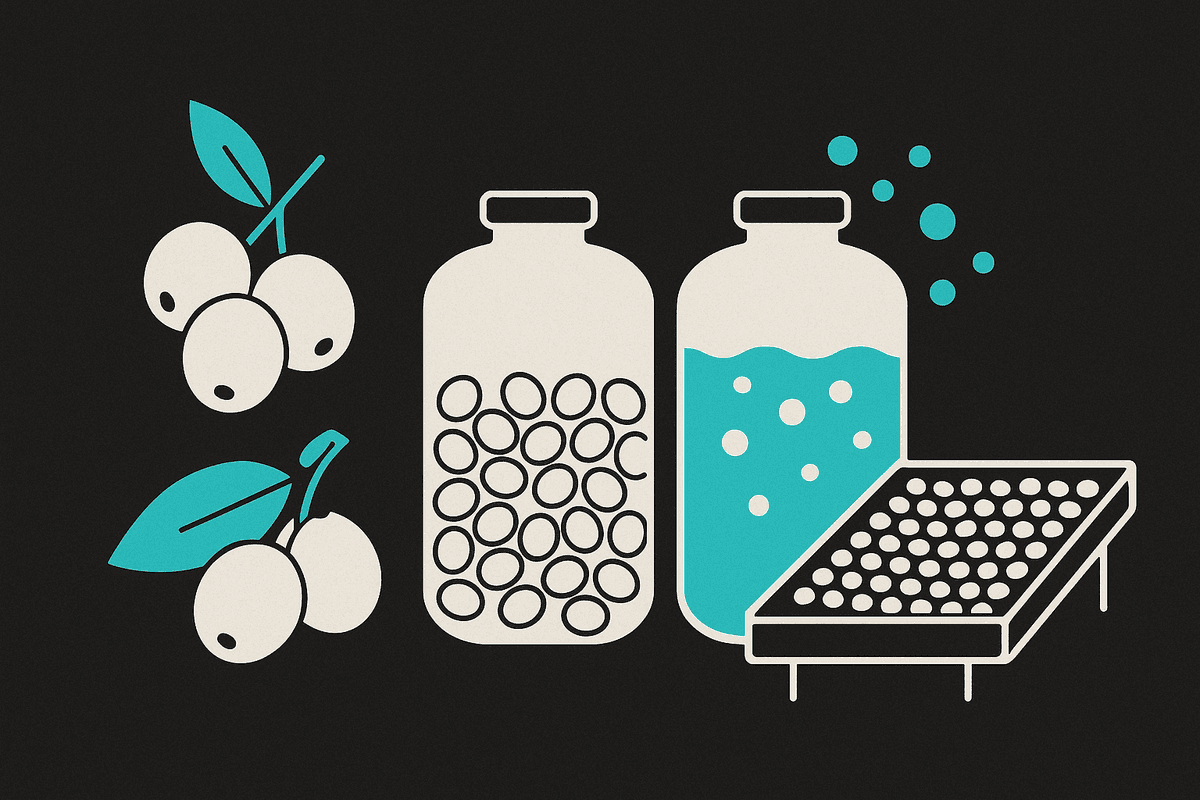
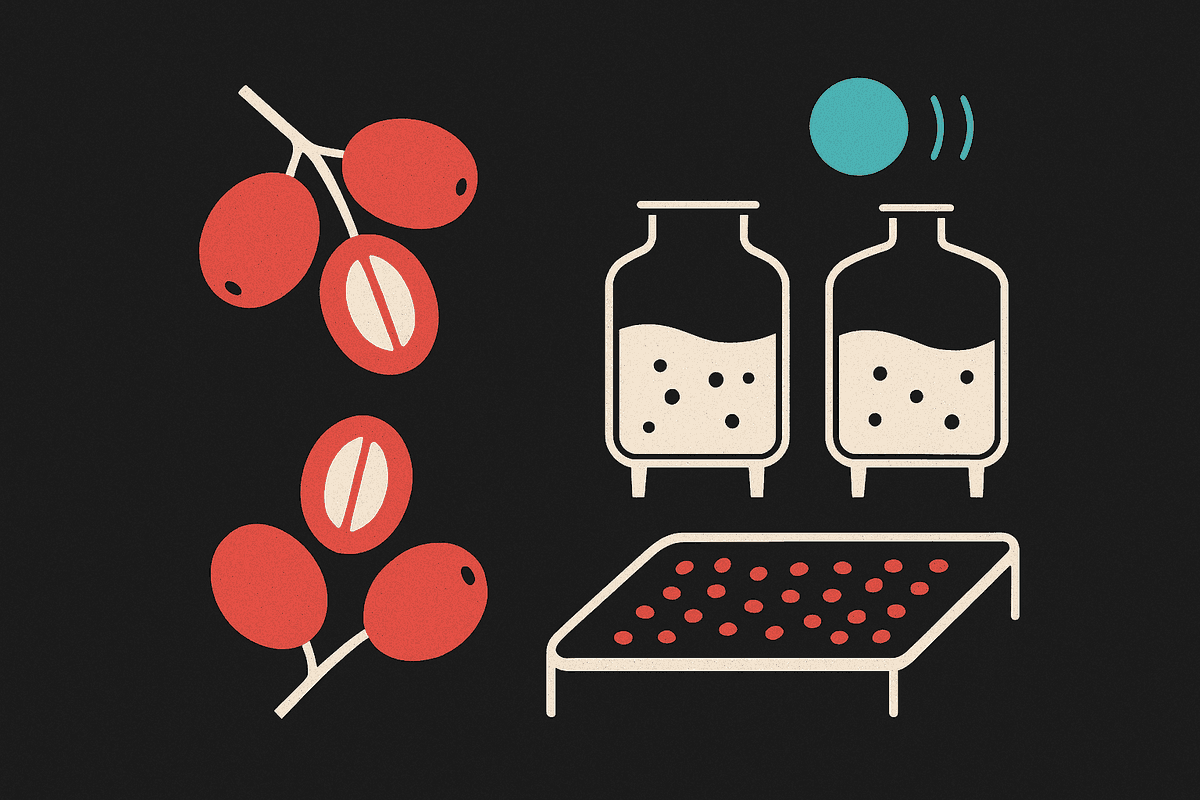
A coffee cherry has layers most people never think about. Outer skin first. Then the mucilage — a translucent, gelatinous coating packed with sugars, pectin, and organic acids, wrapped around the parchment that protects the seed. Washed processing strips it all away. Natural keeps the whole cherry intact through drying. Honey process takes a third road: the skin comes off, the mucilage stays on, and how much stays on determines almost everything about what the cup will taste like.
TL;DR
- Honey process depulps the cherry but leaves the mucilage layer on through drying — making it a fermentation substrate rather than discarded waste.
- Mucilage sugar concentration runs 15–22 Brix on ripe cherries. During drying, those sugars ferment into organic acids, esters, and alcohols that shape flavor [1].
- More mucilage retained = slower drying = longer fermentation = more sweetness and fruit in the cup. The scale runs white (10% mucilage) → yellow (25%) → red (50%) → black (75–100%) [3].
What's Actually in That Layer
Fresh mucilage from a ripe cherry typically reads 15–22 Brix on a refractometer — higher sugar concentration than many fruit juices. The main sugars are sucrose, fructose, and glucose. Pectin forms a structural gel that slows moisture loss and holds the microbial environment against the parchment. Organic acids and amino acids are present in smaller quantities but add their own flavor precursors to the mix.
When drying starts, fermentation follows almost immediately. The mucilage begins at a pH of roughly 6.7–6.8. As lactic acid bacteria — the dominant microorganism, accounting for around 48% of the microbial community in Arabica honey fermentations — convert sugars into acids, that pH can fall to approximately 4.3 [2]. Sucrose is the first casualty: it is essentially fully consumed by the end of fermentation. Glucose and fructose decline more slowly [1].
[!DATA value="15–22 Brix" label="Typical sugar concentration of ripe coffee cherry mucilage"]
What Fermentation Actually Produces
It's not just acid. The microbial community on a honey drying bed generates ethanol, esters, aldehydes, and ketones alongside lactic and acetic acid [2]. These volatile compounds partially diffuse through the parchment and leave chemical fingerprints on the seed beneath — which esters form and which persist depends on the organisms present, the temperature of the drying bed, and how long the process runs [4].
This is why two coffees both labeled "red honey" can taste very different. The designation describes the processing protocol. The flavor comes from the microbial ecology of that specific farm, that season, those drying conditions. The label is a starting point, not a specification.
The Four Grades
The naming convention maps to mucilage retention and drying management:
White honey: ~10% mucilage retained. Dries quickly with frequent turning. The result is close to washed — clean, bright, minimal fermentation character.
Yellow honey: ~25% mucilage. Gentle sweetness, still fairly clean, a bit more body. Fermentation influence present but contained.
Red honey: ~50% retained. Less frequent turning, sometimes partial shade to slow moisture loss. Stone fruit, deeper sweetness, and heavier body begin to emerge.
Black honey: ~75–100% mucilage, dried over 12–14 days with minimal turning. The longest fermentation window in the spectrum. The cup pushes toward natural: soft acidity, full body, pronounced fruit [3].
Note
The color names are not standardized across producers. One farm's "red honey" may retain more or less mucilage than another's. Treat the grade as useful context, not a guaranteed flavor profile.
It Doesn't Actually Taste Like Honey
The name comes from the appearance — golden, viscous, sticky mucilage on the drying bed. The flavor outcomes are more varied: dried fruit in red and black grades, mild floral sweetness in yellows, a clean brightness in white. Rarely, if ever, literally honey.
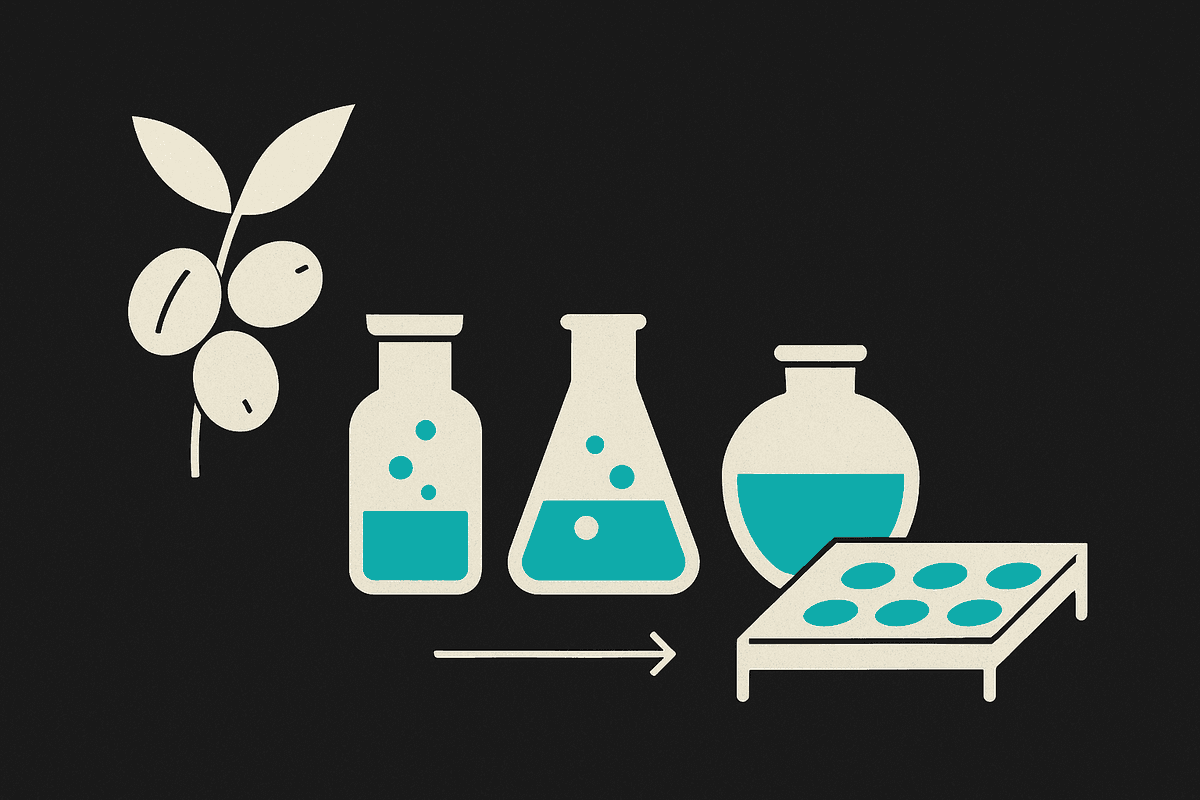
What the mucilage does is act as a fermentation substrate and moisture regulator. It slows drying unevenly, creates microclimates across the bed, and provides carbon sources for a microbial community that rewrites the bean's aromatic profile from the outside in. The bean's genetic potential sets the ceiling. The mucilage's chemistry fills in between.
Try this
- Brew a washed and a black honey from the same origin, identically. Same method, ratio, and temperature. The honey process coffee will typically show more body and fruit; the washed will read cleaner and more acid-forward. You're tasting the same genetics run through a different microbial process.
- Grind the honey process coffee slightly coarser. The extra body and fermentation complexity can read as muddiness at standard grind sizes; backing off opens the fruit character without the heaviness.
- Compare the dry aroma before brewing. Ground honey process coffee often smells noticeably more fruit-forward than its washed counterpart from the same origin — the fermentation byproducts are already resident in the bean.