
TL;DR
- Co-fermentation adds outside stuff (strawberries, cinnamon, cascara) to the fermentation tank. Yeast inoculation adds a named microbe strain and nothing else.
- A 2025 mSystems paper inoculated Colombian Castillo with defined starter cultures and saw measurable bumps in sweetness and body while bitterness dropped — with no added substrate at all.
- The SCA lets both compete at the World Barista Championship as long as additives go in before the green-coffee stage, but transparency about which method was used still varies wildly.
The vocabulary mess
Walk into any specialty shop in 2026 and you'll see "co-ferment," "infused," "yeast inoculated," and "experimental" slapped on bag labels like they're synonyms. They're not. Perfect Daily Grind spent a whole article in November 2025 trying to untangle this, and it's worth getting right — because the science, the flavor mechanism, and the ethics of each are genuinely different [1].
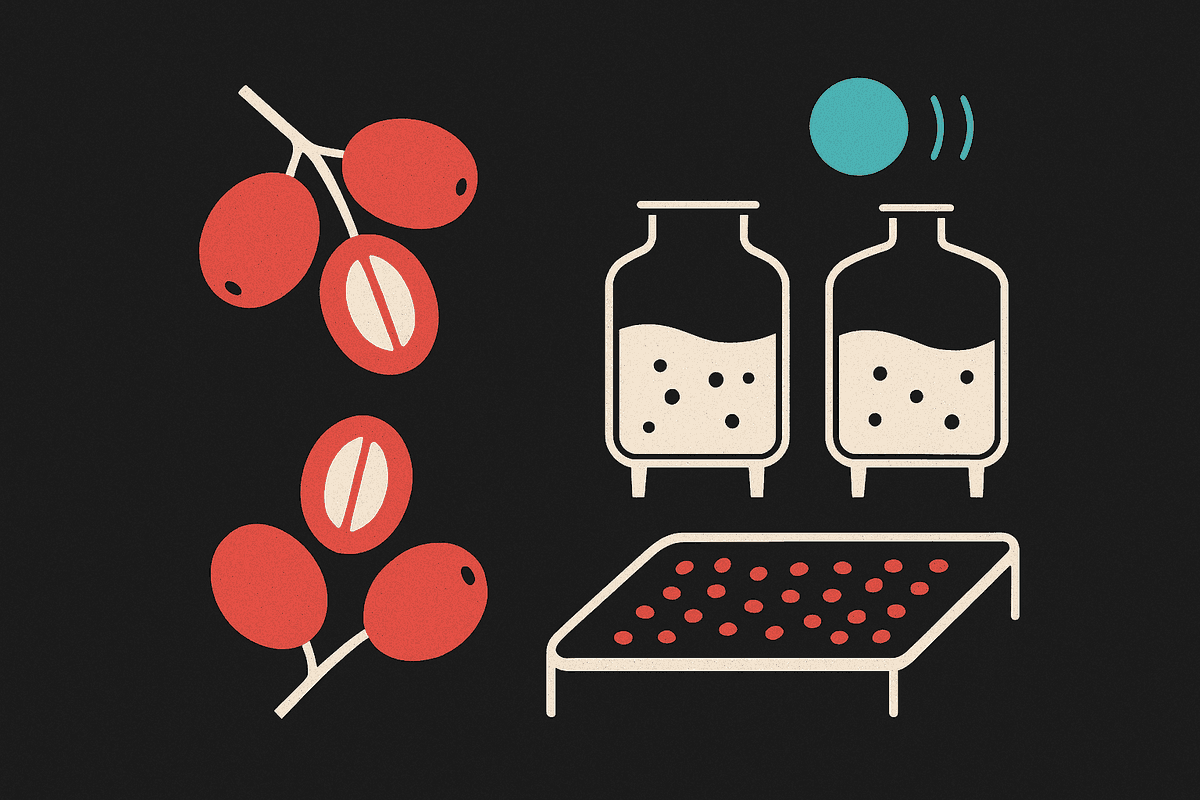
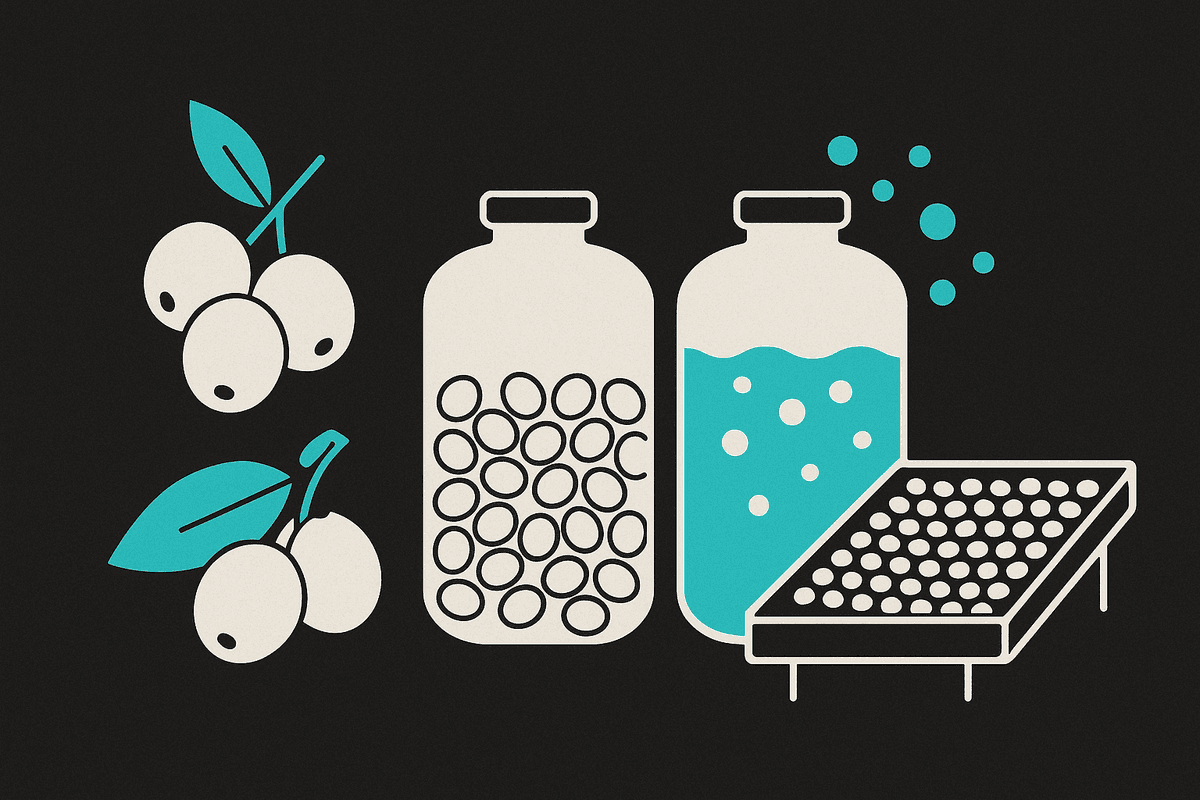
Co-fermentation: a producer dumps an external organic substrate — think macerated strawberries, cinnamon sticks, cascara, passion fruit pulp — into the fermentation tank with the coffee cherries. The added sugars and aromatics shift what the native microbes produce, and some flavor compounds migrate into the bean via osmotic dehydration.
Yeast inoculation: a producer adds a specific, named microbe (often Saccharomyces cerevisiae strains, sometimes paired with Lactiplantibacillus plantarum) to a standard fermentation. Nothing else goes in. The inoculum just out-competes the random wild microbes and steers the reaction down a more predictable path.
A yeast-inoculated natural is still just coffee microbiology, dialed in. A strawberry co-ferment is coffee plus strawberries — pretending otherwise is how trust in specialty coffee erodes.
What the microbes are actually doing
Here's where a fresh 2025 study gets fun. Researchers published in mSystems took washed-process Castillo cherries in Colombia and ran controlled ferments with defined starter cultures, then sequenced the microbial community and measured metabolites and cupping scores [2]. The inoculated lots beat the spontaneous-fermentation controls across the board: higher sweetness, lower bitterness, lower astringency, and "consumer-preferred notes." The microbial community shifted toward the inoculated strains within hours, and specific volatile esters — the fruity ones — showed up in higher concentrations.
A separate 2025 paper in Sustainability built a starter culture from coffee-production by-products (cherry pulp, mucilage) and showed that even inoculums derived from the farm itself can push fermentation toward more complexity and body [3]. You don't need to import a lab-grown yeast to get the effect — you just need to stop rolling the dice on whichever microbes happen to be on the cherry skin that morning.
So where does the flavor come from?
[!DATA value="Hours" label="Time for inoculated strains to dominate the microbial community"]
With yeast inoculation, the fruit notes are biochemical. Yeast cells metabolize sugars in the mucilage and exhale esters, higher alcohols, and terpenes. Those compounds either get absorbed into the bean or trigger enzymatic reactions that change the bean's own precursor chemistry during drying. Roasting then amplifies a subset of them.
With co-fermentation, you're stacking two mechanisms. The microbes still do their thing, but now they have new substrates (strawberry sugars, cinnamon phenolics) to chew on, plus the bean sits in a sugar-and-aroma bath that pulls compounds through the parchment. That's why a strawberry co-ferment can smell unambiguously of strawberries — you're partially marinating the seed.
That's also the controversy. A Slate piece from early 2025 called out the fuzzy line between co-fermenting with real fruit and outright "infusing" with extracts or dehydrated powder [4]. The SCA drew its own line: any additive has to be introduced before the green-coffee stage to count at the World Barista Championship, and Panama's Best of Panama went the other way and banned infused lots entirely to "protect the authentic identity" of the country's coffee [5].
Why it matters for your cup
At PQN we cup both styles with open minds — but we label them differently on the shelf, because they are different. A yeast-inoculated natural is still just coffee microbiology, dialed in. A strawberry co-ferment is coffee plus strawberries, and pretending otherwise is how trust in specialty coffee erodes. If a bag won't tell you which it is, that's a signal.
Try this
- Side-by-side cup. Buy one yeast-inoculated lot (look for "Lalcafé," "CIMA," or a named S. cerevisiae strain) and one fruit co-ferment of the same origin, then cup them side by side at a 1:16 pour-over. Ask yourself: does the co-ferment's fruit note taste like the fruit that was added, or like a natural intensification? That's your nose learning the difference.
- Ask your roaster. Next time you buy an "experimental" processed coffee, ask exactly what went into the tank. The good ones know. The great ones will tell you without being asked.
Sources [1] Perfect Daily Grind, "Co-ferments vs. yeast inoculation" (Nov 2025) [2] Metagenomic, metabolomic, and sensorial characteristics of Castillo inoculated with starter cultures — mSystems (2025) [3] Microbial inoculums from coffee by-products — Sustainability (Feb 2025) [4] Slate, "Co-fermentation coffee flavors — controversy" (Feb 2025) [5] SCA / WCC rules and regulations; Panama SCA 2024 exclusion