

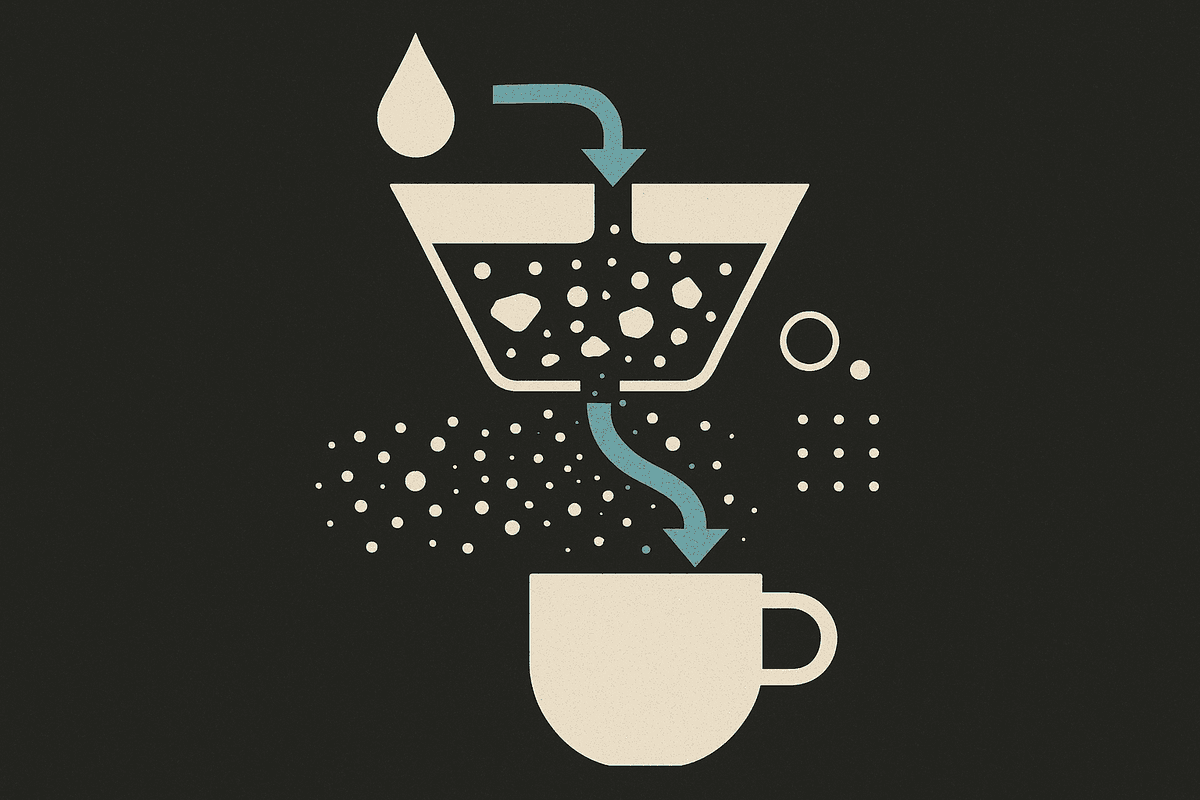
TL;DR: TDS (total dissolved solids) tells you the strength of your coffee — the percentage of your brew that’s actually dissolved coffee material. Combined with extraction yield, it’s the closest thing we have to an objective measure of how well you brewed.
What TDS Actually Measures
When you brew coffee, hot water dissolves soluble compounds from the ground beans. TDS is the concentration of all that dissolved stuff, expressed as a percentage. A typical brewed coffee lands between 1.15% and 1.45% TDS. That means roughly 98.5% of your cup is still just water.
You measure it with a refractometer — a small optical device that shines light through a drop of coffee. Dissolved solids bend light predictably.
TDS vs. Extraction Yield
Two cups can have the same TDS but taste completely different if one used 15g of coffee and the other used 22g. Extraction yield tells you what percentage of the grounds actually dissolved.
The formula: Extraction Yield = (Brewed Coffee Weight × TDS) / Dose
The SCA’s recommended window is 18–22%. Below 18%, sour and underdeveloped. Above 22%, harsh and astringent. The sweet spot is the middle.
What the Numbers Mean
Think of TDS as volume on a stereo and extraction yield as the EQ settings. High TDS = intense. Low TDS = tea-like. But if extraction is off, turning up the volume just makes bad sound louder.
Try This
Brew your usual recipe, then brew a second cup with 10% less coffee but everything else identical. Taste them side by side and notice how concentration changes your perception of acidity, sweetness, and body.