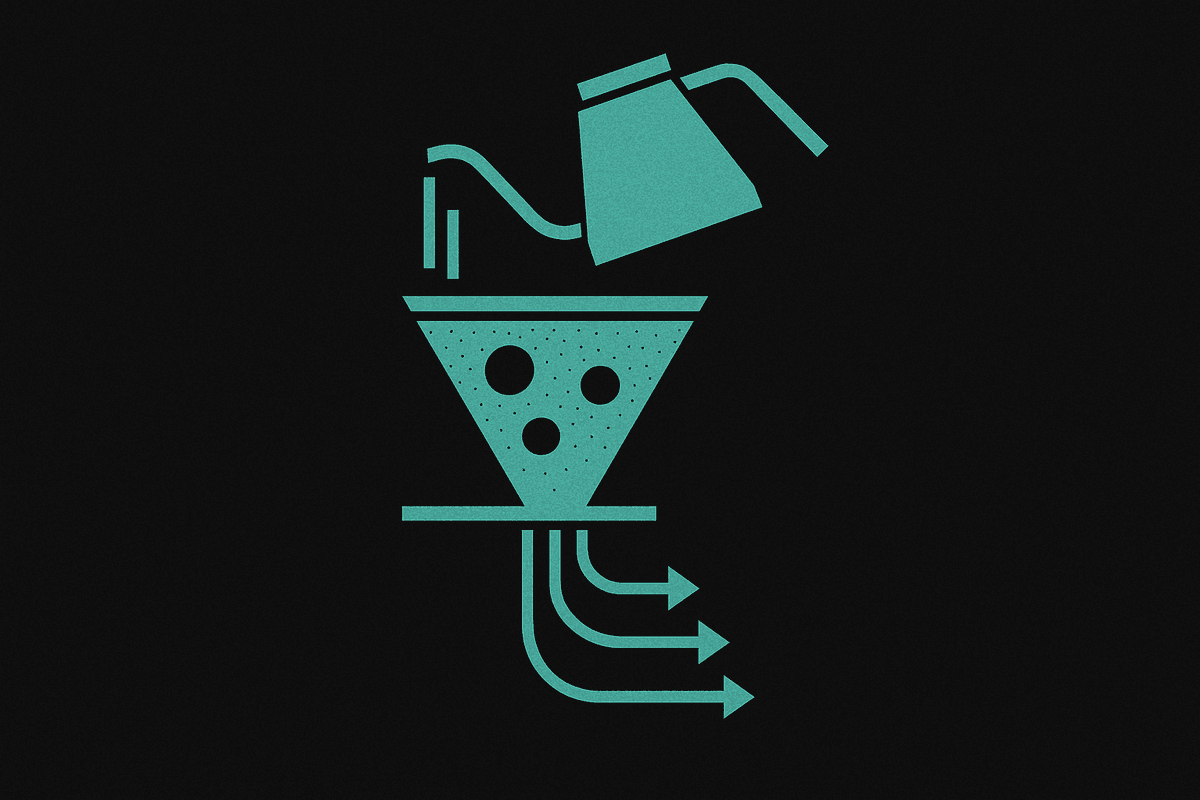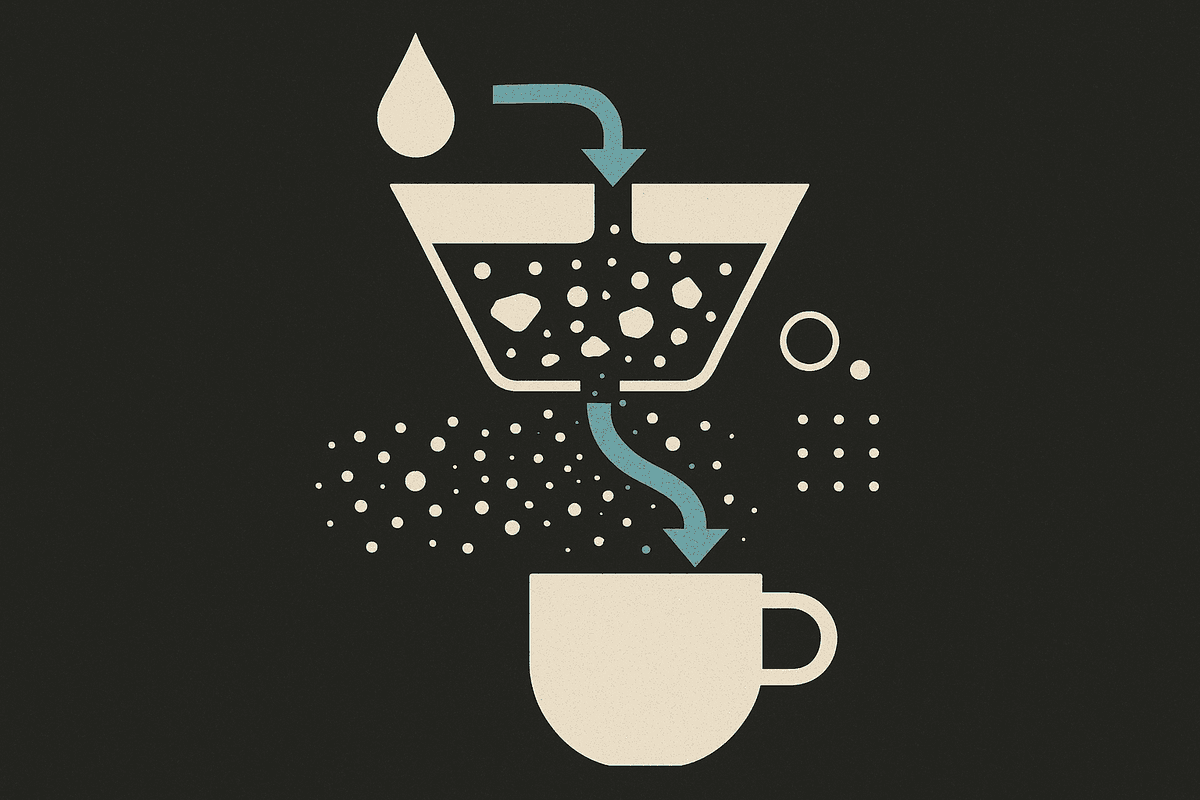


TL;DR: The minerals in your brew water — especially calcium and magnesium — act as extraction agents that pull flavor compounds from coffee. Too few and it tastes flat. Too many and it’s muted. The SCA recommends 75–250 mg/L total hardness.
Why Minerals Matter
Pure distilled water is terrible at brewing coffee. It’s so hungry for dissolved material that it over-extracts harsh compounds, and without minerals to bind to flavor molecules, the result tastes hollow. Heavily mineralized tap water can block extraction entirely.
Calcium and magnesium are the key players. Research from the University of Bath found magnesium is particularly good at extracting fruity, bright flavors, while calcium pulls heavier, creamier notes.
The SCA Water Standard
Total hardness: 50–175 mg/L. Total alkalinity (buffer): ~40 mg/L. pH: 6.5–7.5. TDS: 75–250 mg/L.
Alkalinity is the sleeper variable — bicarbonates neutralize acids. Too much buffer swallows all the acidity, leaving flat, papery coffee.
Austin’s Water
Austin municipal water runs 180–220 mg/L TDS with moderate-to-high alkalinity from the limestone aquifer. It tends to mute bright acidity. Many Austin cafes use RO + remineralization.
Try This
Brew the same coffee with tap water, distilled water, and a Third Wave Water packet in distilled. Taste side by side. The gap is water chemistry at work.